
Workforce Management (WFM) is an essential part of any business. By making smart use of WFM, you can give your organisation's productivity and efficiency a structural boost.
This doesn't just lead to better results. It also increases job satisfaction within the team and contributes to higher customer satisfaction. WFM also helps you set priorities and build strategic plans.
What is Workforce Management?
Workforce Management, or WFM, is about deploying your team optimally. It helps organisations gain and maintain control over planning and labour costs. It covers everything from staff scheduling and hourly standards to business processes and KPIs. A solid WFM strategy ensures you always have the right qualified team members in the right place, which is essential for meeting your business goals.
Useful WFM tools: Workload Planner
Workforce management relies on a lot of data. You need an accurate forecast of workload, as well as a correct calculation of your hours and labour cost budget. These elements form the basis for your planning. A tool that brings this data together is, in our view, indispensable.
At Endevries, we use Workload Planner to plan and manage workload intelligently. Workload Planner lets you determine the most effective staff deployment based on the current workload. You steer on hours, optimise team composition and work structurally towards your labour cost targets.
Less pressure on the team
By using Workload Planner as the basis for your planning, you deploy staff optimally. This leads to higher efficiency and, at the same time, less pressure on your team. Work is distributed more evenly and peak periods can be managed more effectively.
Striking the right balance
Within WFM, you operate in the tension between cost and customer satisfaction (financial and commercial objectives). This tension forces you to make concrete choices at the foundation of the WFM cycle. That leads to the right workload, the ideal team composition and an optimal work organisation. Once this is in order, you achieve balance and effective, efficient staff deployment.
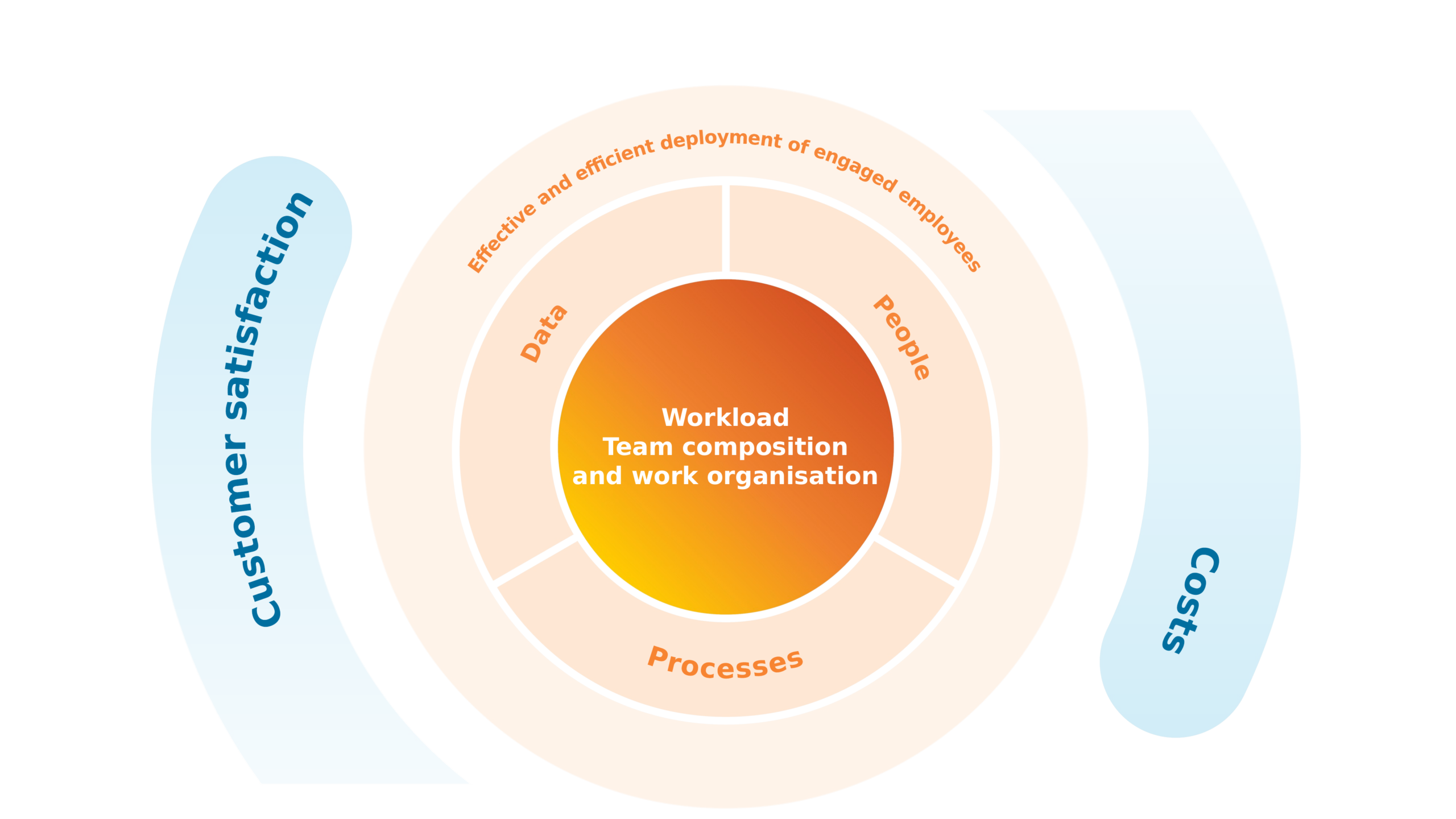
The WFM cycle
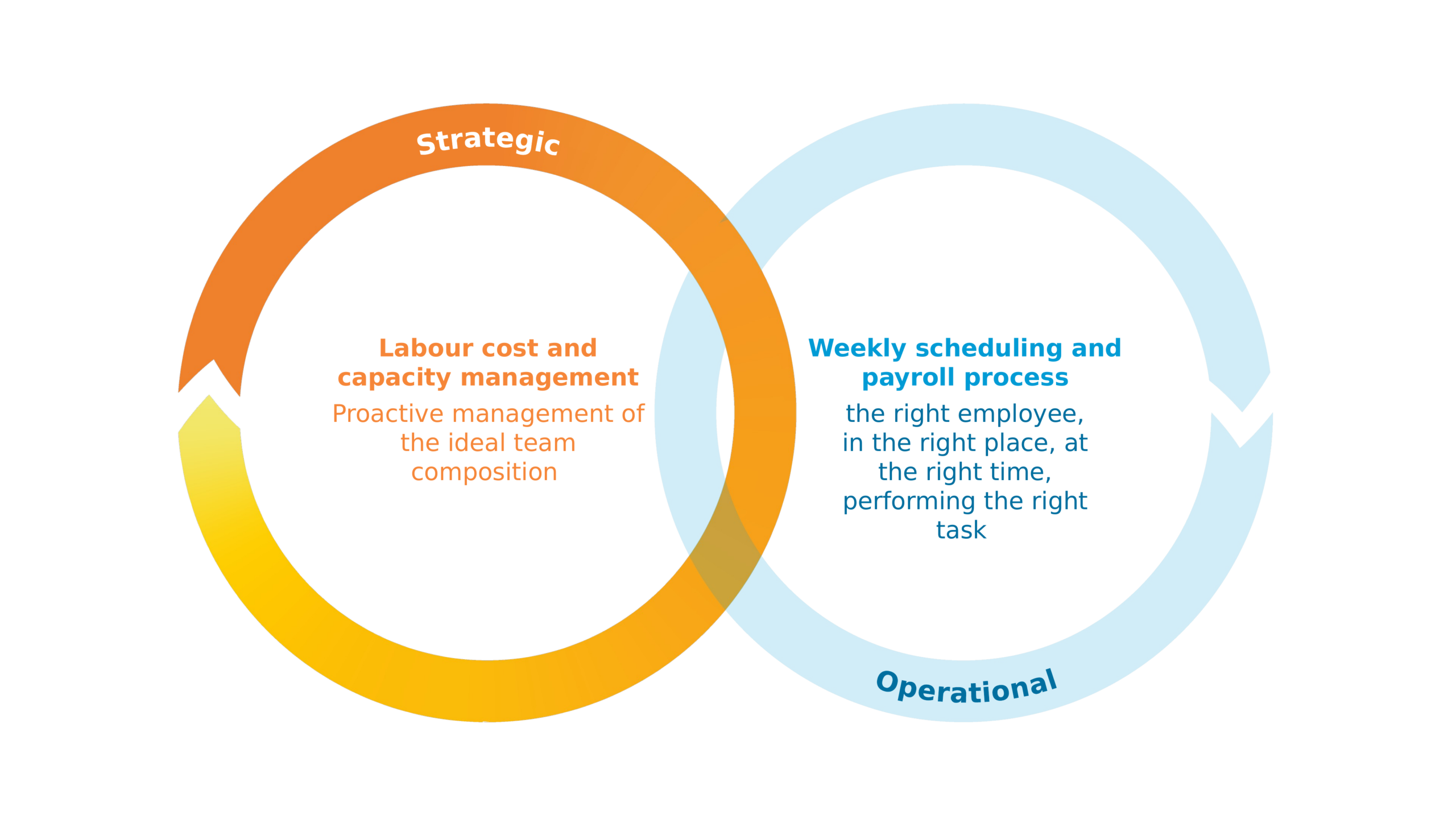
At Endevries, we distinguish between the strategic WFM cycle and the operational WFM cycle. The operational cycle plays a key role every week and consists of four practical elements: forecast, schedule, realisation and payout.
In the strategic WFM cycle, we zoom out and look at, among other things, the workload and the ideal staffing level of your team over a longer period. This ensures your team can focus on what they do best, at the moments that matter most. Questions about the long-term feasibility of your contract structure and the affordability of your formula also belong in the strategic WFM cycle. This cycle is periodic.
Interested in working together?
Discover the hidden potential within your organisation. Start sharpening your WFM strategy today and uncover the hidden potential of your business.
Endevries has been the efficiency expert since 1983, supporting organisations in professionalising their WFM processes and achieving the best results. We provide insight into where the opportunities lie for your organisation, based on research, data and a wealth of experience. Curious how you score on WFM? Check out our blog on the WFM scan, or get in touch with us to take WFM in your organisation to the next level.